
Appliance Repair
A washer that won't drain, a dryer that stopped heating, a refrigerator that isn't cooling — appliance failures disrupt daily life. Lubbock TX Handyman diagnoses and repairs major household appliances across Texas, with a written estimate before any parts are ordered.
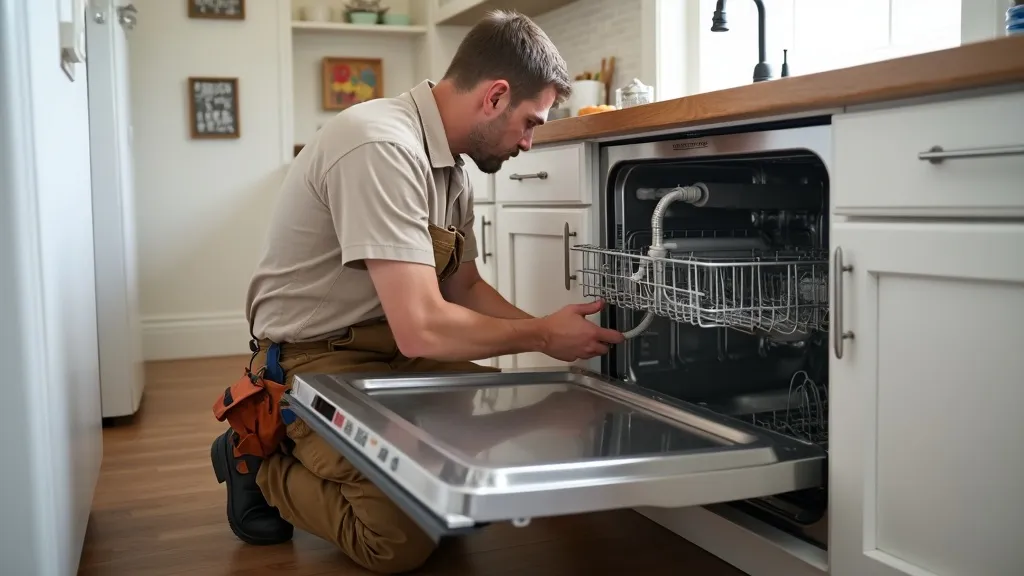
Diagnose first. Quote before any parts are ordered. Fix it right.
Appliance repair gets done wrong in two ways: parts are ordered before the root cause is identified, or cheap aftermarket components are used on appliances built around specific component tolerances. A washing machine that shakes violently during spin might have a broken suspension rod, an unbalanced load sensor, or a failed shock absorber — the symptom is the same but the repair is different. Getting the diagnosis right before ordering anything is the difference between a repair that holds and one that needs to be revisited in six months.
Lubbock TX Handyman starts with a thorough diagnostic on every appliance call. The root cause is identified and explained, a written estimate is provided, and work begins only when you approve the quote. Parts are sourced from OEM suppliers or equivalent-specification replacements — not the cheapest part available for the application.
The repair-vs-replace question gets answered honestly during the diagnostic. If a repair cost approaches the cost of a new appliance, or if the appliance has multiple failing components that suggest accelerated end-of-life, we'll tell you directly rather than taking the repair revenue. The goal is a recommendation that makes financial sense for your situation.
What's included
The most common appliance failures — and what actually causes them
Refrigerator cooling problems are most often caused by one of three things: a failed evaporator fan (the fridge section warms up while the freezer stays cold), a defrost system failure (ice buildup blocks the evaporator coil), or a refrigerant leak (the compressor runs constantly but can't reach setpoint). Each has a different repair. A compressor failure is the most expensive scenario and often justifies a replacement conversation on older units.
Washing machine failures cluster around a few common modes: pump failure (won't drain), lid switch or door latch failure (won't spin), water inlet valve failure (won't fill), and control board failure (random behavior or no response). Dryers fail most often from thermal fuses blown by restricted exhaust airflow, failed heating elements on electric dryers, or bad igniter/valve coils on gas dryers. The root cause — blocked exhaust duct — needs to be addressed alongside the fuse replacement or the fuse blows again.
Hard water and humidity in Texas — how they affect appliances
Texas water is notoriously hard in many areas, and hard water accelerates specific appliance failures. Dishwashers develop mineral scaling on the spray arms and internal components that reduces cleaning performance and eventually blocks water flow. Water heaters and ice makers accumulate sediment that reduces efficiency and can clog inlet valves. Washing machine drum seals and hose connections can calcify at the fitting points, making them rigid and prone to cracking.
In Gulf Coast cities where humidity is also elevated, appliance exterior surfaces and internal metal components corrode faster than in drier Texas markets. Refrigerator condenser coils that are exposed to humid air collect dust and debris faster and should be cleaned annually to maintain cooling efficiency.
From first call to a fully tested repair.
Call & describe
Tell us the appliance brand, model if you have it, and what it's doing — or not doing. The more detail, the better we can estimate parts and time.
Diagnostic & estimate
A thorough diagnostic identifies the root cause. You get a written repair estimate before any parts are ordered or work begins.
The repair
Correct OEM or equivalent parts are sourced and installed. We don't use cheap aftermarket parts on appliances designed around specific component tolerances.
Final test
The appliance runs a full cycle before the job is called complete. A washing machine that drains and spins. A refrigerator holding temperature. No early exits.
Frequently Asked Questions
Is it worth repairing an appliance or should I replace it?
The standard guidance is: if the repair cost exceeds 50% of the replacement cost and the appliance is more than halfway through its expected lifespan, replacement is worth considering. But context matters — a 5-year-old refrigerator that needs a $300 compressor relay repair is worth fixing. A 15-year-old dryer that needs a $400 motor replacement on a unit that retails for $500 is not. We'll tell you honestly which side of that line your repair falls on.
What's usually wrong when a washing machine won't drain?
The most common cause is a clogged pump filter or a failed drain pump. Lint, coins, and debris collect in the pump filter over time and block flow. A pump that fails entirely stops draining completely and usually makes a humming noise during the drain cycle. Both are straightforward repairs. Less commonly, a kinked or obstructed drain hose or a failed lid switch (on top-loaders) prevents the spin cycle from engaging, which leaves water in the drum.
Do you service high-end brands like Sub-Zero, Viking, or Thermador?
Yes. Premium appliance brands use the same fundamental components — compressors, control boards, heating elements, motors — and the repair process is similar. The difference is parts cost and the need to source OEM components rather than generic replacements. We'll confirm parts availability and cost before committing to a repair on a premium appliance so you can make an informed decision.
My refrigerator isn't cooling but the freezer is fine — what's wrong?
This is almost always a defrost system failure or a failed evaporator fan motor. In frost-free refrigerators, a defrost heater melts ice off the evaporator coil periodically. When it fails, ice builds up on the coil and blocks airflow into the refrigerator section — but the freezer, which is directly adjacent to the evaporator, still gets cold. The fix is replacing the defrost heater, thermostat, or control board depending on which component tested faulty.
How long does an appliance repair usually take?
A diagnostic visit takes 45–90 minutes. If the part is in stock, the repair is often completed on the same visit. Parts that need to be ordered typically arrive in 2–5 business days, and the repair is completed on a second visit. We'll give you a specific timeline when the part is identified so you know what to expect.
What causes a dryer to stop heating?
Electric dryers most commonly lose heat from a blown thermal fuse — a one-shot safety device that trips when the dryer overheats, usually from restricted airflow through a clogged lint trap or exhaust duct. The thermal fuse is inexpensive to replace, but the underlying airflow restriction needs to be cleared or the fuse will blow again quickly. Gas dryers lose heat from a failed igniter, a bad gas valve coil, or a blown thermal fuse — the diagnostic process is similar but involves checking the gas components as well.
Appliance Repair in your city.
Every town puts a different kind of wear on a home. These pages cover what the job actually involves in each city — the local soil, climate, and housing stock included.
Appliance Repair in Humble
Harris County
Appliance Repair in Katy
Waller / Harris County
Appliance Repair in Richmond
Fort Bend County
Appliance Repair in Willis
Montgomery County
Don't see your town? See all service areas or ask about your address.
Get your appliance diagnosed and back to working order.
Written estimates before any parts are ordered. Lubbock TX Handyman serves homeowners across Texas.