
Garage Door Repair
A broken spring, a door that won't open, or an opener that sounds like it's working too hard — garage door problems stop your day cold. Lubbock TX Handyman handles spring replacement, opener repair, panel fixes, and full door replacement across Texas.
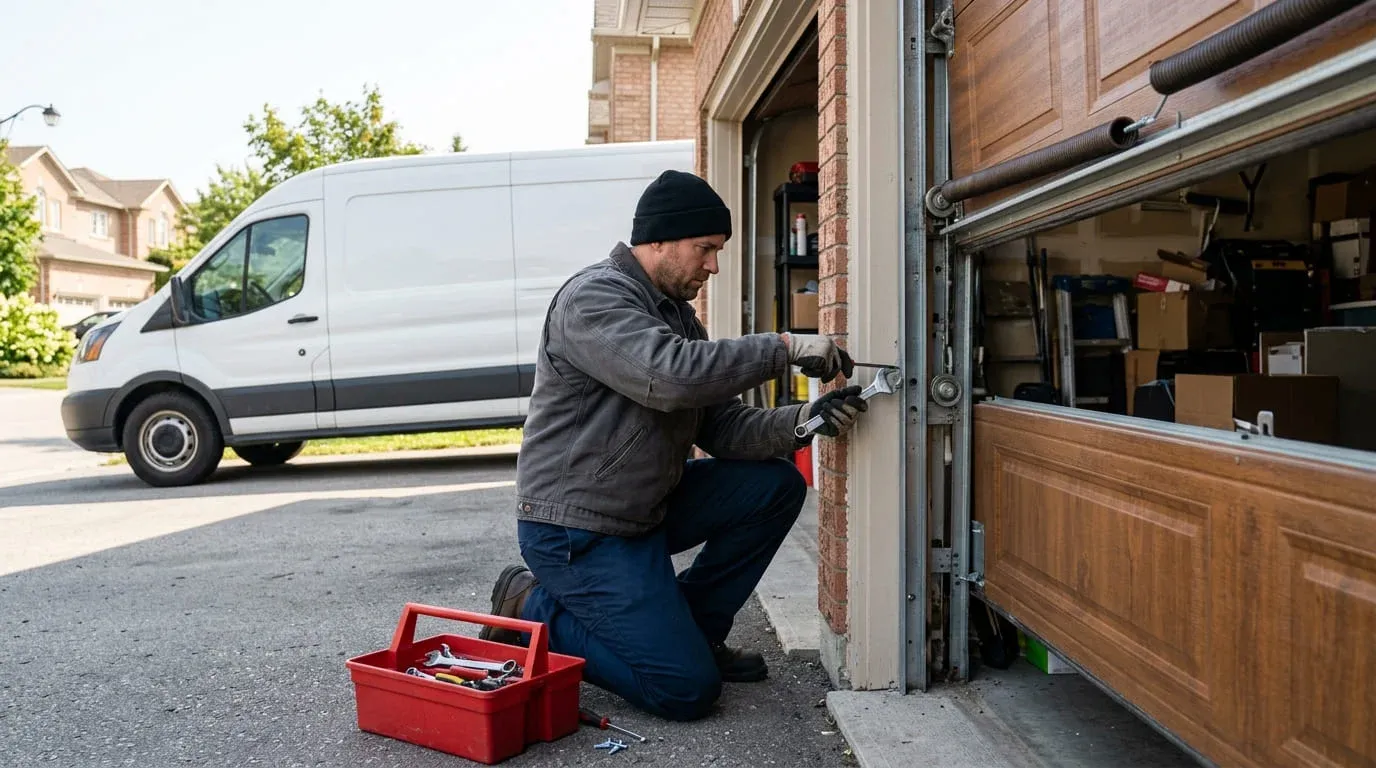
Most garage door problems are mechanical — and most are fixable the same day.
Garage door systems are a combination of heavy springs under significant tension, cables, rollers, tracks, and an opener — all working in coordination. When one component fails, the door stops working or becomes a safety hazard. A broken torsion spring means the opener can no longer lift the door. A snapped cable causes the door to lift crookedly and puts stress on the opener motor. A bent track panel causes binding that strains the opener and eventually strips the drive gear.
Most garage door repairs — spring replacement, cable replacement, opener repair, roller and hinge replacement — are completed in a single visit. Panel replacement takes longer when the matching panel needs to be sourced. Full door replacements are typically scheduled once the new door is confirmed available.
Lubbock TX Handyman specs the correct components for your door weight and cycle requirements — not the cheapest parts available. Springs are rated by door weight; installing an undersized spring on a heavy door shortens its life significantly. Every repair gets tested under full operation before the job is called complete, including the automatic reversal safety test that confirms the door stops and reverses when it meets resistance.
What's included
Spring replacement — what's actually involved
Torsion springs sit above the door on a horizontal shaft and store the energy needed to counterbalance the door weight. They're under very high tension — a standard residential torsion spring holds 100–200 foot-pounds of torque when wound. This is why spring replacement is not a safe DIY repair: an improperly wound spring under tension can release catastrophically, causing serious injury.
The replacement process involves releasing any remaining tension from the broken spring, removing both springs from the shaft (replacing both, not just the broken one), installing new springs rated to the exact door weight, and winding them to the correct tension. The door is then balanced and the opener limits are adjusted if the spring change altered the travel distance.
Texas temperature cycling and garage door hardware
Texas temperature swings — from sub-freezing winter nights in North and West Texas to 105°F summer afternoons — put mechanical stress on garage door hardware that moderate-climate systems don't experience. Metal components expand and contract with temperature change, which accelerates wear at pivot points, causes lubricant breakdown, and stresses the spring wire at its attachment points.
In North Texas particularly, where temperature swings between winter lows and summer highs can exceed 100°F within a single calendar year, torsion spring wear is faster than published cycle ratings would suggest. Annual lubrication and hardware inspection catches the early signs of wear before a spring failure leaves the door inoperable.
From first call to a door that opens safely.
Call & describe
Tell us what's happening — a door that won't open, a broken spring, a crooked panel, or an opener that grinds. Photos are helpful but not required.
Written estimate
A clear quote with parts, labor, and timeline. We'll tell you upfront if a repair makes sense or if the door is past its useful life.
The repair
Springs, cables, and hardware are replaced with commercial-grade components rated for the correct door weight and cycle count.
Final check
The door is balanced, the safety reversal is tested, and the travel limits are set before the job is complete.
Frequently Asked Questions
How long do garage door springs last?
Standard torsion springs are rated for approximately 10,000 cycles — one cycle being one open and one close. At two cycles per day (typical for a single-car household), that's roughly 13 years. Higher-use households, RV garages, or shops can wear springs out in 5–7 years. Heavy doors and doors with more than one spring wear faster. When one spring breaks, replacing both at the same time is almost always the right call — the second spring is at the same point in its wear cycle.
My garage door won't open — what's wrong?
The most common causes are a broken spring (the opener motor will hum or strain but the door won't move), a snapped cable (door hangs or lifts at an angle), or a failed opener capacitor or motor. Safety sensors that are misaligned or blocked can also prevent the opener from functioning. A quick visual check: look at the torsion spring above the door — if it has a visible gap or break, that's the culprit. Don't try to manually operate a door with a broken spring — the weight is significant.
Can I replace just one spring, or do both need replacing?
We always recommend replacing both springs at the same time when one breaks. Springs wear at the same rate since they're under the same load and cycle count. Replacing only the broken spring leaves the intact one — which has the same amount of wear — to fail within months, requiring another service call. The incremental cost of replacing both at once is modest and saves a second visit.
What causes a garage door to go off-track?
Off-track doors usually result from an obstruction in the track, a broken cable that causes one side of the door to drop faster than the other, or a bent track from vehicle impact. A door that goes off-track should not be forced back into operation — the panels can buckle and the cables can tangle, turning a straightforward repair into a more expensive one. Leave it in place and call for service.
Should I repair or replace my garage door opener?
Openers manufactured before 2011 may not comply with current UL 325 safety standards and lack the rolling code security that prevents code theft. If the opener is more than 12–15 years old, noisy, or doesn't have rolling code technology, replacement is typically the better investment. Modern openers with DC motors, battery backup, and Wi-Fi connectivity are significantly quieter and more reliable than their older counterparts. A diagnostic will tell you if the repair is worth it.
Do you service oversized agricultural or workshop garage doors?
Yes. We service commercial-style doors, oversized single-panel doors, and multi-car garage setups. Heavy agricultural doors require higher-torque springs and more robust hardware than residential doors — we spec the correct components for the door weight and cycle requirements rather than fitting residential parts to a commercial application.
Garage Door Repair in your city.
Every town puts a different kind of wear on a home. These pages cover what the job actually involves in each city — the local soil, climate, and housing stock included.
Garage Door Repair in Addison
Dallas County
Garage Door Repair in Argyle
Denton County
Garage Door Repair in Aubrey
Denton County
Garage Door Repair in Bedford
Tarrant County
Garage Door Repair in Dripping Springs
Hays County
Garage Door Repair in Duncanville
Dallas County
Garage Door Repair in Hutchins
Dallas County
Garage Door Repair in Josephine
Collin County
Garage Door Repair in Justin
Denton County
Garage Door Repair in Kaufman
Kaufman County
Garage Door Repair in Kennedale
Tarrant County
Garage Door Repair in Krum
Denton County
Garage Door Repair in Lake Dallas
Denton County
Garage Door Repair in Lavon
Collin County
Garage Door Repair in Liberty Hill
Williamson County
Garage Door Repair in Pilot Point
Denton County
Garage Door Repair in Richland Hills
Tarrant County
Garage Door Repair in Roanoke
Denton County
Garage Door Repair in Sanger
Denton County
Garage Door Repair in Sunnyvale
Dallas County
Garage Door Repair in Terrell
Kaufman County
Garage Door Repair in Wilmer
Dallas County
Don't see your town? See all service areas or ask about your address.
Get your garage door working safely again.
Free written estimates, correct components for your door weight, and same-day service on most spring and opener repairs.