
Siding Repair
Cracked panels, warped sections, storm damage, or algae-stained walls — siding problems let moisture reach your wall framing if left alone. Lubbock TX Handyman repairs and replaces siding for Texas homeowners with a clear estimate before work starts.
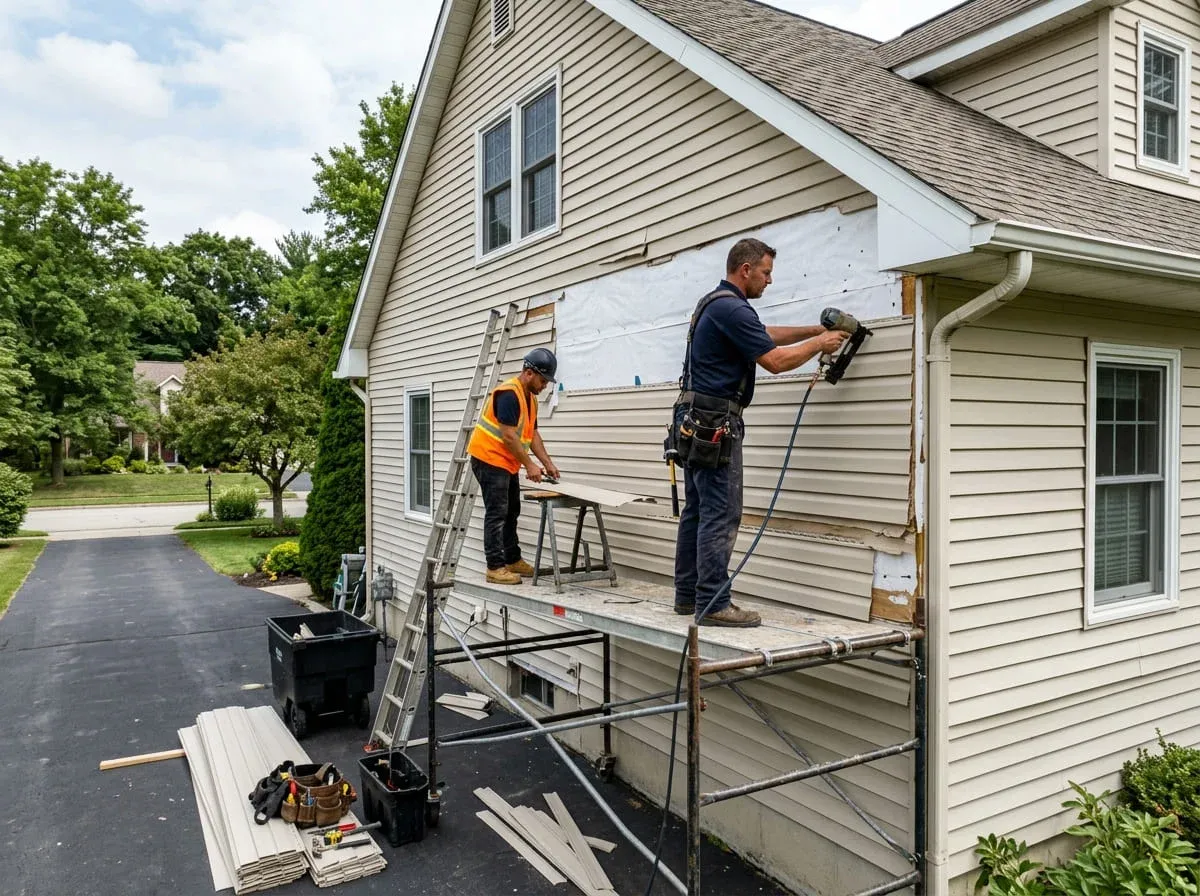
Siding that keeps water out — not just weather-looking.
Siding isn't just cosmetic — it's the moisture barrier between your wall framing and the weather. A cracked panel, a lifted seam, or a warped section where water pools isn't just an eyesore. It's an entry point for moisture that can reach the house wrap, the insulation, and eventually the framing itself before you see any interior sign of a problem.
Siding repairs handled by Lubbock TX Handyman cover individual panel replacement, full section repairs after storm damage, and complete exterior siding replacements coordinated with a licensed specialty partner for larger projects. Every job includes honest input on whether a patch is the right call or whether the condition of the existing siding makes a wider replacement the better value.
What's included
How vinyl siding fails in hot, humid climates
Vinyl siding installed in the Gulf Coast corridor of Texas faces conditions it wasn't optimally designed for: sustained summer heat that causes significant thermal expansion, year-round humidity that keeps the material constantly cycling between wet and dry, and frequent severe weather that generates hail impacts and wind uplift pressure.
The result over time is warping and buckling at the nail slots, cracking at impact points, gaps opening at seams where panels overlap, and fading on sun-exposed elevations. Each of those failure modes lets moisture reach the wall assembly behind the siding — where it's much harder to detect and much more expensive to repair.
Fiber cement as a long-term alternative
For homeowners facing a full replacement, fiber cement siding — brands like HardiePlank — performs meaningfully better in the Texas Gulf Coast climate than vinyl. It doesn't warp under thermal expansion, it resists moisture absorption, and its paint finish holds for 15+ years versus the 5–8 years typical of painted wood. The higher upfront cost is usually justified on whole-house replacements where the goal is a 25–30 year finished life.
We'll explain the material tradeoffs honestly during the estimate so you can make the right call for your budget and timeline.
From first call to final check.
Call & describe
Tell us what's going on — a cracked panel, warped sections, storm damage, or mold staining. Photos are helpful but not required.
Written estimate
A clear quote covering the repair scope, materials, and timeline — with honest input on whether a full section replacement makes more sense than a patch.
The repair
Damaged panels get removed and replaced, all seams and penetrations get resealed, and existing siding is matched as closely as possible.
Final check
Every seam gets checked for gap and alignment before the job is called complete. Caulk lines are clean. Nothing is left to catch water.
Frequently Asked Questions
How does Texas humidity affect vinyl siding?
Vinyl expands and contracts significantly with temperature swings — and in high-humidity Gulf Coast climates, that cycling happens more often. Over time, panels warp, buckle, and develop gaps at the seams that let moisture infiltrate behind the siding. UV exposure also causes fading and brittleness, especially on south and west-facing walls.
Vinyl vs fiber cement — which is better for Texas?
Fiber cement (like HardiePlank) is more durable in the heat and humidity of the Gulf Coast corridor — it doesn't warp, it's resistant to moisture, and it holds paint well for 15+ years. The tradeoff is higher material and installation cost. Vinyl is adequate and cost-effective for most repairs; fiber cement is the better long-term choice for full replacements in coastal-adjacent Texas climates.
Can storm-damaged siding be repaired, or does it need full replacement?
It depends on the extent of the damage and the age of the siding. Localized hail damage or wind-popped panels can usually be repaired by replacing individual panels or a section. If the damage is widespread, or if matching the existing siding color is impossible, a full wall or full exterior replacement often makes more financial sense.
What causes the green or black staining on siding in humid Texas climates?
That staining is algae and mold growth — very common in the Gulf Coast corridor where humidity stays high year-round and rainfall is frequent. It's a surface condition that can be treated without replacing the siding, but it also signals that moisture is sitting against the wall longer than it should, which is worth checking further.
Do I need a permit for siding replacement in Texas?
Permit requirements vary by city and county. Full exterior siding replacements often require a permit in larger Texas municipalities; small repairs typically do not. We confirm the requirement for your specific address before starting any project.
Siding in your city.
Every town puts a different kind of wear on a home. These pages cover what the job actually involves in each city — the local soil, climate, and housing stock included.
Don't see your town? See all service areas or ask about your address.
Protect your walls before moisture gets behind them.
Free written estimates, honest repair-vs-replace guidance, and siding work that's sealed properly from day one.