
Trusted HVAC Repair in Richmond, TX
In Fort Bend County the air conditioner has two jobs, and most Richmond complaints are about the second one. Lubbock TX Handyman measures humidity and airflow before anyone talks about a bigger unit.
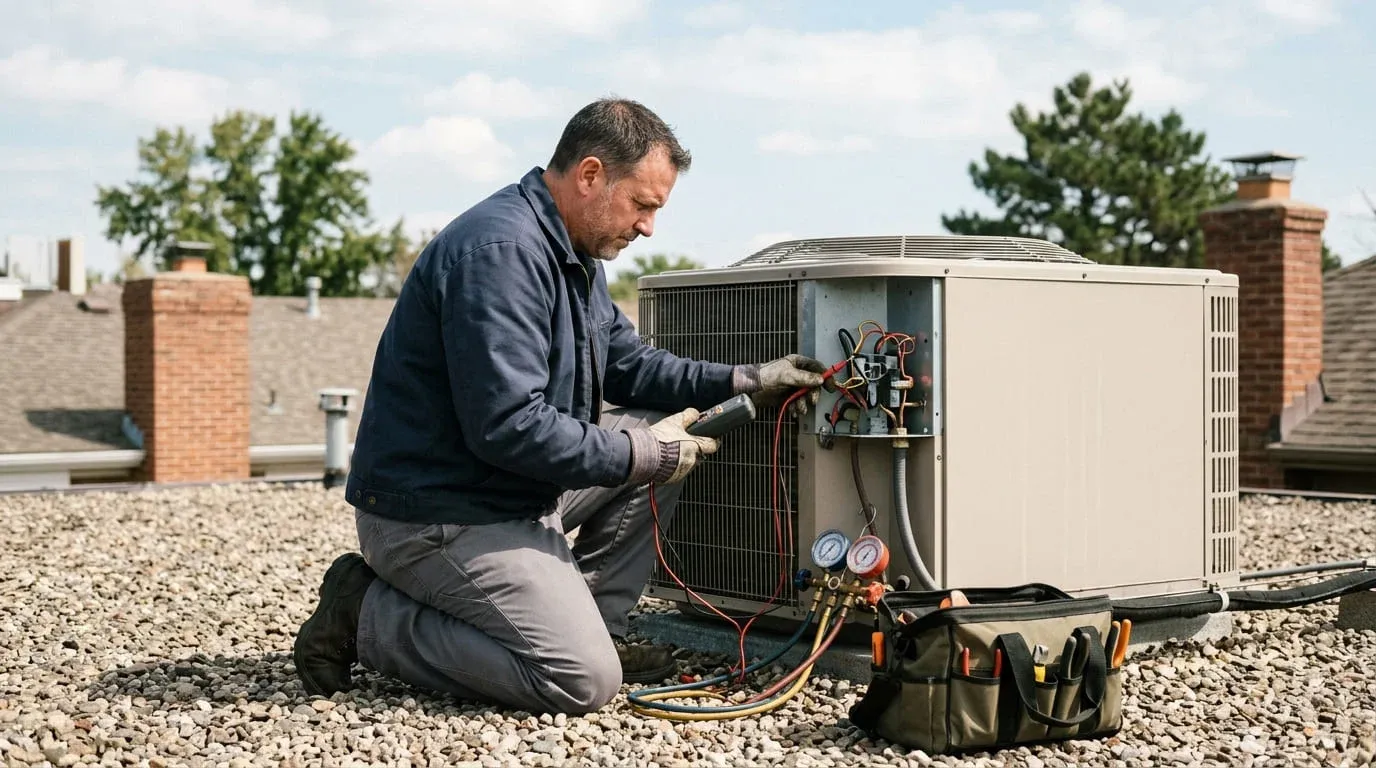
In Richmond, the air conditioner has two jobs, and the second one is why the house feels wrong.
HVAC repair in Richmond turns on a fact that gets skipped in almost
every sales conversation: an air conditioner does two separate things,
and only one of them is temperature. Richmond is a city of roughly
12,600 people in a Fort Bend County corridor that has added tens of
thousands of homes since 2000, and it sits close enough to the coast
that outdoor air carries moisture nine months of the year. The other
job of the system is removing that moisture, and it is the job that
fails first.
Here is the part that surprises people. Cooling is instant and
dehumidification is not. An evaporator coil starts dropping the air
temperature within a minute of startup, but it only begins pulling
meaningful water out of the air after it has run long enough to get
cold and stay cold, which takes several minutes. A system that
satisfies the thermostat in eight minutes has done half its work. The
air is cool and the water is still in it, so the house reads 74 degrees
on the wall and still feels sticky, and the natural reaction is to set
the thermostat lower, which makes the runtime shorter still.
That is why the most common upgrade sold in Fort Bend County is the
wrong one. A homeowner whose house never feels comfortable is quoted a
larger unit, and a larger unit makes the cycles shorter, which makes
the humidity worse. The comfortable house in this climate is the one
with longer, gentler runtimes — a correctly sized system, a lower
blower speed on the cooling stage, and equipment that can run at part
load instead of slamming on and off. Holding 76 degrees at 48 percent
humidity feels dramatically better than holding 74 at 60 percent, and
it costs less to run.
Before adding capacity, three cheaper things get checked. The first is
return air, because most Richmond builder houses were given one central
hallway return for an entire floor. The second is duct sizing and
condition, because flex duct in a Fort Bend attic sags, kinks over
framing, and pulls loose at the boot. The third is attic insulation
depth, because ductwork sitting in 135-degree air is fighting a load
that has nothing to do with the equipment. Any of the three will make a
properly sized system look undersized.
The return-air problem is worth spelling out, because it explains the
single most common complaint we hear in Aliana, Harvest Green, and
Long Meadow Farms — the back bedroom that runs four to six degrees
warmer than the living room. Air that goes into a room has to get back
out. When the bedroom door is closed and the only return is out in the
hallway, the room pressurizes and supply flow drops off until it nearly
stops. Adding more supply air does nothing, because the restriction is
on the way out, not the way in. A transfer grille above the door, a
jump duct through the attic, or a properly undercut door restores the
path, and it is one of the cheapest genuine comfort upgrades available
in a builder home.
Then there is the attic itself, which in Richmond is where the water
goes. An air handler working hard on an August afternoon in this
humidity can pull five gallons of condensate out of the air in a day.
That water leaves through a narrow PVC line that grows biofilm every
single summer, and when the line clogs the water backs up into the
secondary pan. The first thing most homeowners see is a brown ring on
a hallway ceiling. A float switch in the secondary pan shuts the system
down before that happens, and it costs a small fraction of the drywall,
paint, and insulation it protects. Every attic unit in this county
should have one, and a surprising number still do not.
A clammy house and a wet attic pan are the front half of one story, and mold is the back half. If damp air has been sitting in your walls or around an air handler for a season, read how humidity turns into a mold problem in Katy homes — the moisture source has to be closed off before any cleanup means anything.
What's included
Areas we serve around Richmond
Cooling and airflow pricing for Richmond homeowners.
| Job | Typical Range |
|---|---|
| Diagnostic service call | $85 – $150 |
| Capacitor or contactor replacement | $140 – $340 |
| Condensate line clearing + float switch | $150 – $340 |
| Evaporator coil clean & drain pan service | $280 – $650 |
| Attic duct repair and resealing (per run) | $120 – $400 |
| Added return air or transfer grilles | $350 – $1,200 |
Ranges reflect typical Fort Bend County jobs. Condensate protection sits near the bottom of this table on purpose — it is the cheapest line here and it prevents the most expensive damage. Refrigerant work, coil replacement, and full changeouts are quoted separately after the airflow numbers are taken. Every job gets a written estimate before work begins.
From first call to final check, in Richmond.
Tell us the symptom
First, describe what the house is doing rather than what you think is broken. Cold but clammy, one hot bedroom, a stain on the hallway ceiling, and a unit that runs constantly are four different problems, and they point to four different parts of the system before anyone opens a panel.
We measure, not guess
Second, we take supply and return temperatures, static pressure across the air handler, and humidity at the return. Those three numbers separate an equipment fault from a duct fault, which is the split most Fort Bend cooling complaints actually fall on.
The repair
Third, we fix the thing the readings point at — a failed capacitor, a leaking coil, a collapsed flex run, a clogged condensate trap, or a return that is too small for the blower. You get told which category it is before we quote it.
Protect the ceiling
Finally, we clear and treat the condensate path, confirm the secondary pan drains where it should, and fit a float switch if the air handler does not already have one. In a Richmond attic that switch is the cheapest insurance in the house.
Why Richmond residents choose Lubbock TX Handyman for HVAC.
Selling more tonnage to a Fort Bend homeowner whose house feels clammy is an easy sale, and it is usually the wrong one. We take supply and return temperatures, static pressure across the air handler, and humidity at the return before anyone says the word replacement, because those three numbers separate an equipment problem from a duct problem — and in this county it lands on the duct or return side more often than people expect. When the fix is a capacitor or a leaking coil, we say so. When it is a collapsed flex run over a joist, a hallway return too small for the blower, or a bedroom with no path back to that return, we say that instead, and those repairs cost a fraction of new equipment. Condensate protection goes on every attic job we touch, because a twenty-dollar switch outranks a ceiling. Lubbock TX Handyman serves Richmond, Rosenberg, and the Fort Bend County corridor with written estimates on every job.
Frequently Asked Questions
My house is cold but feels clammy. Why?
That is a humidity problem, not a temperature problem, and in Fort Bend it usually means the system is oversized for the house. An air conditioner removes moisture only while it is running, so a unit that satisfies the thermostat in eight minutes cools the air and leaves the water in it. The house hits 74 degrees at 60 percent relative humidity and feels worse than a smaller unit holding 76 at 48 percent. Longer runtimes, a correctly sized system, and a lower fan speed on the cooling stage are the fixes.
Should I install a bigger AC to cool my Richmond home faster?
Usually no, and on the Gulf Coast side of Texas it often makes things worse. Extra capacity buys shorter cycles, and short cycles are exactly what stops a system from pulling humidity out of the air. Oversizing also hard-starts the compressor more often and pushes more air through ductwork that was never sized for it. Before adding tonnage, the return air, duct sizing, and attic insulation should be checked, because those are the usual reason a correctly sized unit cannot keep up.
There is a water stain on my ceiling under the attic air handler. What happened?
The condensate drain clogged. A Richmond air handler can pull five or more gallons of water out of the air on an August day, and that water runs through a narrow PVC line that grows biofilm every summer. When the primary line blocks, water backs into the secondary pan, and when that pan overflows you get the stain. A float switch shuts the system off before the pan overflows and costs a tiny fraction of a ceiling repair. Every attic unit should have one.
Why is one bedroom always warmer than the rest of the house?
Most often the room cannot get its air back to the return. Many Richmond builder homes have a single central return in the hallway, so when a bedroom door is closed, the supply keeps pushing air in and the room pressurizes until the air stops flowing. Four to six degrees of difference is typical. The fix is not more supply air. It is a transfer grille, a jump duct, or an undercut door that gives the room a path back to the return.
Does past flooding affect an outdoor AC unit years later?
It can, and around the Brazos bottoms it is worth asking about. A condenser that sat in floodwater collects silt and corrosion at the contactor, the disconnect, and the compressor terminals, and those connections often keep working for a season or two before they start arcing, pitting, and failing under load. If a unit was submerged in a past Richmond flood event and it now trips, hums, or fails to start on hot afternoons, the electrical side should be inspected rather than assuming the compressor is dying.
Do you serve the newer master-planned neighborhoods around Richmond?
Yes. Lubbock TX Handyman covers Richmond and the Fort Bend County corridor around it, including Aliana, Harvest Green, Long Meadow Farms, Grand Mission, Pecan Grove, and out to Waterside Estates and the historic streets downtown. The newer master-planned sections tend to bring duct and return-air complaints, while the older Richmond housing stock brings equipment-age and drainage complaints, so mention the age of the house when you call and we can bring the right parts the first time.
Get a free estimate — serving Richmond and Fort Bend County.
Cooling repairs, humidity and airflow corrections, condensate protection, and duct work for Richmond, Aliana, Harvest Green, and Pecan Grove.