
The Best Landscaping in Roanoke, TX
If your yard has gotten a little worse every year since the house was built, the plants are not the problem. Lubbock TX Handyman probes the soil before designing anything.
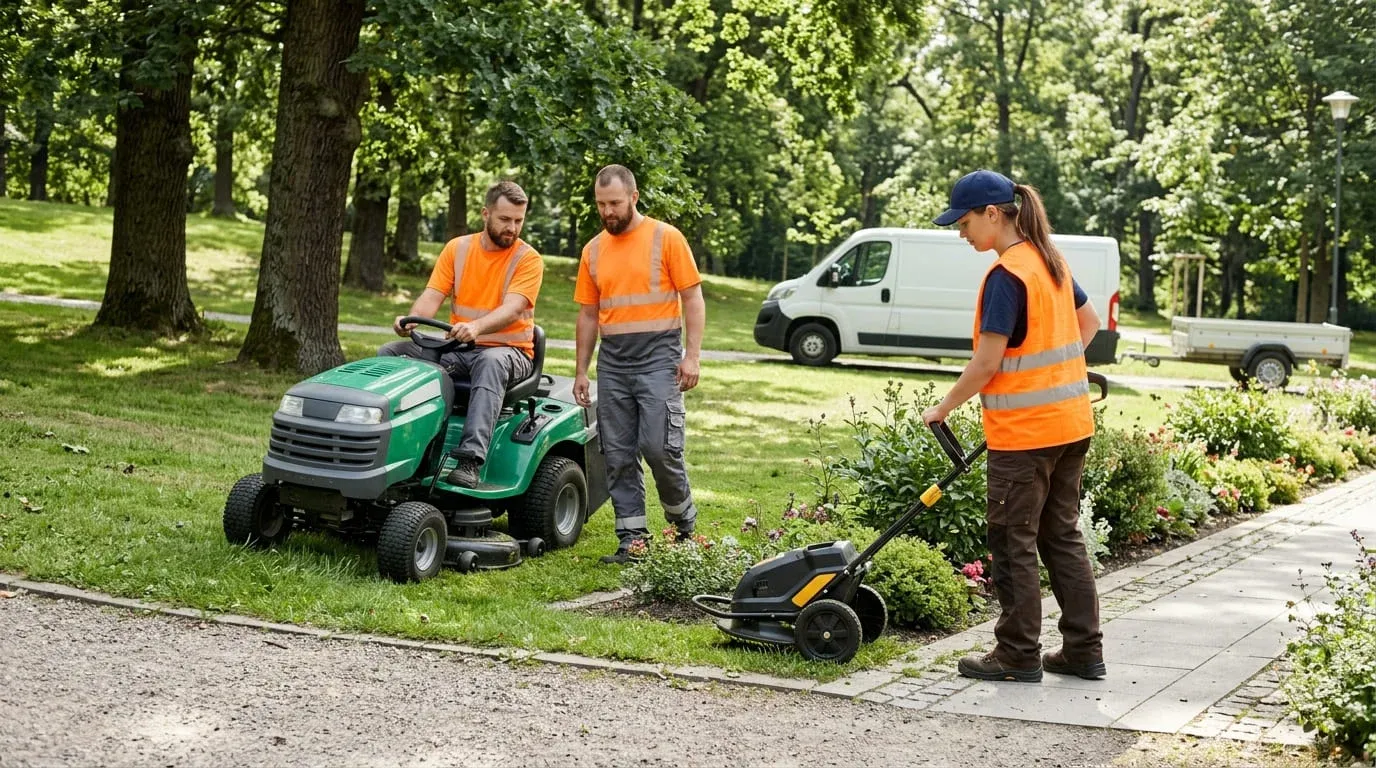
In Roanoke, most yards are planted on a construction site, not on soil.
Landscaping in Roanoke starts with a fact nobody discloses at closing.
Roanoke has grown from a small farm town into a city of roughly 10,300
people along the SH-114 and Alliance corridor, and most of that growth
arrived as subdivisions built fast on scraped ground. Before a
foundation goes in, the native topsoil is stripped and hauled off,
heavy equipment tracks across the remaining subgrade for months, and at
the very end a thin layer of imported sandy loam gets spread and sodded
so the house shows well. What looks like a lawn is turf living on two
or three inches of material over compacted fill.
That explains the timeline almost every Roanoke homeowner describes. The
first year the yard looks excellent, because shallow roots in fresh
sod and builder irrigation are enough. The second year it is uneven.
By the third or fourth summer there are thin patches that will not
recover, beds where shrubs sulk without dying, and a homeowner
convinced the problem is fertilizer, grubs, or a bad sod batch. The
actual problem is that roots hit a layer they cannot penetrate, and
neither can water or air.
There is a two-minute test that settles it. Push a long screwdriver or
a soil probe into the lawn the day after watering. In healthy soil it
slides down six inches or more under hand pressure. If it stops hard at
two or three inches on wet ground, that is compaction rather than
dryness, and no watering schedule will overcome it. The second tell is
just as fast. Run a zone and watch the curb, because water reaching the
sidewalk within five minutes is water the soil never accepted.
Fixing it is unglamorous and it works. Core aeration pulls plugs out of
the profile and opens channels for air, water, and roots, and compost
topdressing brushed into those holes puts organic matter down where it
is needed instead of on the surface. Done seasonally over two or three
years, that combination rebuilds a root zone without excavating the
yard. In planting beds, where the investment per square foot is much
higher, the honest answer is usually to dig the compacted material out
and replace it rather than amend around it.
Irrigation is where most Roanoke water goes to waste, and the fix costs
nothing. On soil that accepts water slowly, a single twenty-minute run
produces about five minutes of absorption and fifteen minutes of runoff
down the street. Cycle-and-soak splits that same twenty minutes into
three shorter passes an hour apart, so nearly all of it soaks in.
Paired with the twice-weekly schedules that are standard across North
Texas through summer, cycle-and-soak is the difference between a deep
watering and an expensive rinse.
The related habit worth breaking is daily light watering. It keeps the
top inch green and teaches roots to stay in it, which produces a lawn
that collapses the first week in August that anything goes wrong. Deep
and infrequent is what builds drought tolerance. Grass selection
follows the same long view — a treeless lot along the SH-114 corridor
wants bermuda for the full sun, heat, and open wind, while St.
Augustine tolerates shade at the cost of more water and a real
susceptibility to take-all root rot and brown patch in this climate.
Worth planning for what the yard becomes as the neighborhood canopy
fills in over the next decade, because bermuda thins as shade
increases.
Denton County hands out two opposite yard problems, and it is worth knowing which one you own. Fifteen minutes north, an Argyle acre lot is designed around septic fields and native Cross Timbers soil that was never disturbed. In Roanoke the soil is the disturbed part, the lot is a fraction of the size, and the constraint is what the builder left behind rather than what the county requires.
What's included
Areas we serve around Roanoke
Soil and yard pricing for Roanoke homeowners.
| Job | Typical Range |
|---|---|
| Site assessment with soil probe and drainage walk | $0 – $150 |
| Core aeration & compost topdressing (typical front yard) | $280 – $700 |
| Irrigation audit, head correction, zone rescheduling | $150 – $450 |
| Bed soil excavation and replacement | $14 – $30 per sq ft |
| Sod replacement, prepped and installed | $2.20 – $4.50 per sq ft |
| French drain installation | $28 – $65 per linear ft |
Ranges reflect typical southern Denton County jobs. Aeration and topdressing sit near the top of this list on purpose, because on a compacted new-build lot they are what makes replacement sod worth buying — and skipping them is how homeowners here pay for sod twice. Irrigation rescheduling often costs nothing beyond the audit. Every job gets a written estimate before work begins.
From first call to final check, in Roanoke.
Probe the soil before designing anything
First, we push a probe into the lawn in several places and see how far it goes before it stops. On a Roanoke new-build that depth is often two or three inches, and it tells us more about why the yard is failing than any leaf sample would.
Watch where the water actually goes
Second, we run the irrigation and watch for runoff. If water is leaving the lawn and reaching the sidewalk within a few minutes, the schedule is the problem before the plants are, and no amount of additional watering time will fix a yard that cannot absorb what it already gets.
The work
Third, we do what the site needs in the right order. Compaction relief and organic matter come before new plants, because installing sod or shrubs into compacted subgrade is buying the same failure again at a higher price. Drainage corrections go in before anything is planted downhill of them.
Hand over a schedule that matches the soil
Finally, you get an irrigation schedule written for your actual soil and slope, usually cycle-and-soak in two or three short passes rather than one long run, plus what to change in July and what to change in October.
Why Roanoke residents choose Lubbock TX Handyman for landscaping.
A failing lawn on a new-build lot is the easiest thing in this trade to sell sod against, and around Roanoke that is usually money spent twice. We probe the soil before quoting plants, because turf that stops at three inches is telling you the root zone failed rather than the grass, and new sod laid on the same compacted subgrade repeats the decline on the same schedule. Compaction relief and organic matter come first, drainage corrections go in before anything is planted downhill of them, and beds get their soil replaced where amending around the problem would not hold up. Irrigation gets audited and rescheduled to cycle-and-soak, which frequently costs nothing and returns more than any product we could sell you. Grass selection is made for the exposure the lot actually has and for the canopy the neighborhood will grow into over the next decade, not for whatever the truck happens to be carrying. Lubbock TX Handyman serves Roanoke, Trophy Club, Justin, and southern Denton County with a written estimate on every job.
Frequently Asked Questions
Our yard looked great the first year and has gotten worse every year since. Why?
That pattern is almost diagnostic of a new-build lot in this area. Builders scrape the topsoil off a site during construction, drive heavy equipment over what is left, then lay sod on a thin layer of imported sandy loam at the end. The turf lives its first year on that shallow layer and on builder irrigation. Once roots try to go deeper and hit compacted subgrade, the lawn cannot get water or air below a few inches, and it declines a little more each summer.
How do I know if my soil is compacted or just dry?
Push a long screwdriver or a soil probe into the lawn the day after watering. In healthy soil it slides down six inches or more with hand pressure. If it stops hard at two or three inches on a wet day, that is compaction, not dryness. The second tell is runoff. Water that reaches the sidewalk within five minutes of the zone starting is not being absorbed, and running the zone longer just sends more of it down the street.
What is cycle-and-soak and why does it matter in Roanoke?
Cycle-and-soak means splitting one long watering into two or three shorter passes with a rest between them. It matters here because compacted clay-influenced soil accepts water slowly, so a single 20-minute run produces 5 minutes of absorption and 15 minutes of runoff. Three 7-minute passes an hour apart deliver the same water with almost none lost. On North Texas twice-weekly schedules that difference decides whether the lawn is actually getting a deep watering.
Should I water a little every day to keep the grass green?
No, and this is the most common well-intentioned mistake in new Roanoke subdivisions. Daily light watering wets the top inch and trains roots to stay in it, which produces a lawn that cannot survive one missed week in August. Deep, infrequent watering pushes roots down and builds drought tolerance. Twice weekly is generally enough in North Texas if the water actually soaks in, which loops back to fixing compaction and using cycle-and-soak.
Which grass belongs in a new Roanoke subdivision?
Sun exposure decides it, and new subdivisions have plenty. On a treeless lot along the SH-114 corridor, bermuda handles the full sun, the heat, and the wind better than anything else and repairs itself from runners. St. Augustine tolerates shade better but needs more water and is prone to take-all root rot and brown patch here. Worth planning for the long term as your neighborhood canopy matures, because bermuda thins as trees grow and shade increases.
Do you serve Roanoke and the surrounding Denton County area?
Yes. Lubbock TX Handyman covers Roanoke and southern Denton County, including Fairway Ranch, Oak Creek Trails, Briarwyck, Marshall Ridge, the historic Oak Street area, and the neighborhoods running toward Trophy Club and the Alliance corridor. Because so many yards here sit on recently built lots, it helps to mention the year the house was finished when you call. That one detail usually tells us whether we are looking at a soil problem or a plant problem.
Get a free estimate — serving Roanoke and southern Denton County.
Turf renovation, aeration, drainage, beds, sod, and irrigation scheduling for Roanoke, Fairway Ranch, Oak Creek Trails, Trophy Club, and Justin.