
Landscaping & Yard Services
Overgrown beds, yards that flood after every rain, or a lawn that never recovered from last summer's heat — Texas yards need work that accounts for the climate, the soil, and the season. Lubbock TX Handyman handles landscaping and drainage work across Texas with a written estimate before any work begins.
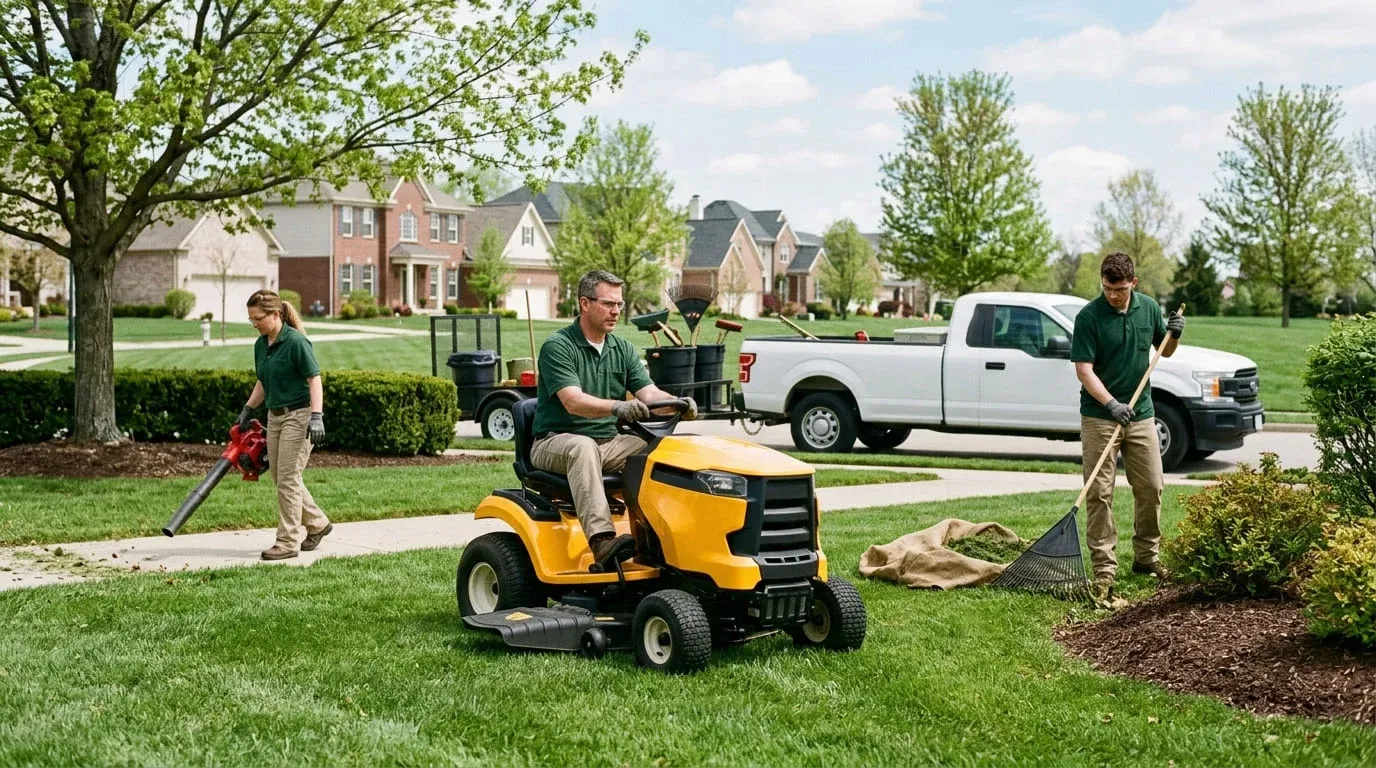
Texas yards don't just need maintenance — they need maintenance that fits the climate.
Landscaping in Texas is fundamentally different from landscaping in a moderate climate. The combination of intense summer heat, extended dry spells punctuated by heavy rainfall events, expansive clay soil that shifts with wet and dry cycles, and Gulf Coast humidity on the eastern half of the state creates conditions that demand plants, irrigation, and drainage approaches specific to where you are in Texas — not a generic template.
The drainage problem is the one that trips up most homeowners. Texas gets significant rainfall in short bursts — particularly in the Houston corridor, where storm events can deliver 3–5 inches in a few hours. Flat terrain and clay soil can't process that volume quickly, which means the design of your yard's drainage matters enormously. A yard that drains well in normal conditions can flood routinely after heavy storms without proper grading and drainage infrastructure.
Lubbock TX Handyman handles the full scope of residential landscaping work — from routine maintenance and cleanup to drainage system installation and lawn restoration. Every job starts with an honest assessment of what the yard actually needs, not just what looks good on a bid.
What's included
Drainage improvement — the most impactful landscaping work in Texas
Drainage problems fall into two categories: surface drainage (how water moves across the yard after it lands) and subsurface drainage (how water moves through the soil after it infiltrates). Most Texas homeowners dealing with standing water have a surface drainage problem — the yard isn't graded to move water efficiently toward the street or an outlet, or the outlet itself is blocked or undersized.
Surface grading corrections are the first fix — adding or removing material to create positive slope away from the house and toward the drainage outlet. When grading alone isn't enough, French drain systems intercept subsurface water and route it to daylight. A French drain installed in a consistently wet low spot will eliminate standing water that a re-grade alone can't solve. Properly installed, with the right pipe size, gravel wrap, and outlet, a French drain requires minimal maintenance and lasts for decades.
Lawn restoration — when grass sections die and don't come back
St. Augustine and Bermuda lawns in Texas can suffer large dead sections from drought stress, fungal disease (brown patch is common in Gulf Coast humidity), grub damage, or shade encroachment as trees mature. Patching with sod is the fastest restoration — dead sections are removed, the soil is prepared, and new sod is laid and watered in. The patched area typically establishes within 2–3 weeks in warm months.
Identifying why the grass died matters before new sod goes in. A section that died from grub damage will lose new sod in the same location if the grub population isn't addressed. A section shaded out by a maturing tree won't support St. Augustine without trimming the canopy or switching to a more shade-tolerant variety.
From site assessment to a yard that actually drains.
Call & describe
Tell us what you're dealing with — overgrown beds, standing water after rain, dying lawn sections, or ongoing yard maintenance. Photos of the property help.
Site assessment & estimate
A thorough look at the yard — drainage patterns, soil condition, existing plantings, and grade — with a written estimate before work starts.
The work
Cleanup, grading, drainage installation, or planting done to a standard that holds up through the next rain — not just the next inspection.
Final walkthrough
Drainage improvements are water-tested when possible. Plantings get an initial watering. Every job gets reviewed before it's called complete.
Frequently Asked Questions
Why does my yard flood after every rain?
Most Texas yard flooding comes from one of three causes: flat or improperly graded terrain that directs water toward the house or into low spots instead of toward the street, clay-heavy soil that absorbs water slowly and creates standing water for hours after rain stops, or insufficient drainage capacity — the soil can't process the rainfall volume fast enough. All three are addressable with grading corrections, French drain installation, or a combination.
What grass grows best in Texas yards?
St. Augustine grass is the dominant choice across the Gulf Coast corridor and most of East Texas — it tolerates shade, humidity, and the heat well, though it goes brown in winter and requires irrigation in dry spells. Bermuda grass performs better in full-sun yards and is more drought-tolerant but doesn't do well in shade. Zoysia is a good middle ground — slower-growing, low maintenance, shade-tolerant, and softer underfoot than Bermuda. The right choice depends on your sun exposure and how much maintenance you want to do.
What's a French drain and does my yard need one?
A French drain is a gravel-filled trench with a perforated pipe that collects groundwater or surface runoff and redirects it away from problem areas — typically to the street, a drainage swale, or a dry well. If your yard holds standing water for more than a few hours after rain in the same location consistently, a French drain is usually the right fix. Proper installation includes planning the outlet point, sizing the pipe for the expected flow volume, and wrapping the gravel in filter fabric to prevent silting over time.
What plants hold up best in Texas heat and humidity?
Native and adapted plants consistently outperform non-native ornamentals in Texas conditions. Texas sage (Leucophyllum), Gulf muhly, Turk's cap, and lantana handle heat, humidity, and periodic drought well. For trees, live oaks and cedar elms are excellent long-term investments — drought-tolerant once established and appropriate for the Texas climate. We'll recommend plants that are right for your specific soil and sun conditions, not just aesthetically popular choices.
How often should trees and shrubs be trimmed in Texas?
Most ornamental shrubs benefit from trimming once or twice a year — in early spring before new growth starts, and again in early fall after the heaviest heat. Trees should be pruned during dormancy (winter) for most species, which is also when wounds seal most effectively and disease pressure is lowest. In Gulf Coast areas, tropical storm debris cleanup is often a separate need from normal maintenance trimming.
Does clay soil in Texas need special treatment for new plantings?
Clay soil in Texas, particularly in the Gulf Coast corridor and North Texas, retains water well but drains slowly, compacts easily, and can shift significantly with wet and dry cycles — all of which stresses plants with deep root systems. For new plantings, amending the backfill with compost improves drainage and aeration. For lawns, core aeration once or twice a year breaks up compaction and lets water and fertilizer reach the root zone more effectively.
Landscaping in your city.
Every town puts a different kind of wear on a home. These pages cover what the job actually involves in each city — the local soil, climate, and housing stock included.
Landscaping in Argyle
Denton County
Landscaping in Humble
Harris County
Landscaping in Katy
Waller / Harris County
Landscaping in Richmond
Fort Bend County
Landscaping in Roanoke
Denton County
Don't see your town? See all service areas or ask about your address.
A yard that looks good and drains right — in Texas weather.
Free written estimates and landscaping work done to fit the Texas climate, not a national template.