
The Most Trusted Roofing in Freeport, TX
Brazoria County sits inside the Texas windstorm catastrophe area, which means a Freeport roof is an insurance document as much as a building component. Re-roof without the inspection and you can lose the coverage that matters most.
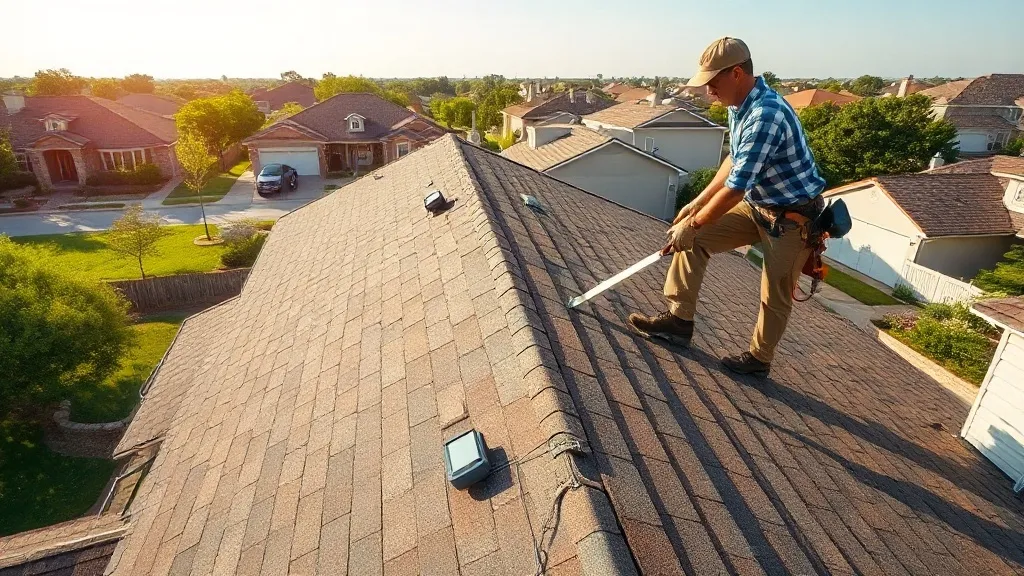
A Freeport roof is an insurance document as much as a roof.
Roofing in Freeport carries a requirement that inland Texas roofs do
not. Brazoria County is one of the first-tier coastal counties inside
the Texas windstorm catastrophe area, which ties roof work here to
windstorm construction requirements and to the Texas Department of
Insurance certificate of compliance that supports eligibility for Texas
Windstorm Insurance Association coverage. Freeport is a working Gulf
Coast city of roughly 10,600 people at the mouth of the Brazos River,
with Port Freeport and the Dow complex on one side and Surfside Beach
and Quintana minutes away on the other. The wind field it sits in is
the reason the rules are different.
The practical consequence catches people out every storm season. A crew
rolls through after a named storm, replaces roofs quickly and cheaply,
and never mentions windstorm inspection. Months later the homeowner
discovers the new roof has no certificate behind it, and the timing
cannot be repaired retroactively in the ordinary course — the
inspection has to happen as part of the job, while the work can still be
examined. You end up with a roof that looks fine and a coverage gap on
the one peril that actually threatens this coast. Confirm the current
requirements with TDI or your agent before any work starts, because they
are set by the state and updated periodically.
What the coastal specification changes on the roof itself is concrete and
worth understanding, because none of it is an upsell. First, shingles get
six fasteners rather than four, placed in the nailing zone. Second, the
deck attachment gets corrected where it is short, using ring-shank nails
at a tighter schedule. Third, the underlayment has to be rated for the
application. Fourth, the perimeter metal is sized and fastened to spec
rather than tacked on as trim.
That order is not arbitrary, and the deck point is the one homeowners
underestimate. Wind does not push a roof down. It accelerates over the
ridge and creates suction, and the strongest negative pressures occur at
the perimeter and the corners rather than out in the field. That is why
storm-damaged roofs on this coast almost always start peeling at a rake or
an eave and unzip inward from there. It is also why the starter strip,
the edge metal, and the first three courses matter more than anything
happening in the middle of the roof, and why sheathing lifting off the
rafters is the failure that genuinely loses a house its roof.
Two more things separate a Freeport roof from a Richmond or Katy roof. The first is salt. Salt aerosol carries several miles inland from the beach and it does not attack shingles, it attacks exposed metal — standard galvanized drip edge, vent flashing, pipe boot clamps, and fastener heads corrode years faster here than the same parts do inland. Stainless or heavier coated metal at those points, and gasketed stainless fasteners on any exposed-fastener metal roof, is the correct coastal spec. The second is how damage actually presents. Carla in 1961, Alicia in 1983, Ike in 2008, Harvey in 2017, Nicholas in 2021, and Beryl in July 2024 all touched this stretch of coast, but the damage that costs Brazosport homeowners the most is rarely the dramatic tear-off. It is wind-driven rain at 60 to 80 miles per hour forced sideways under intact shingle courses, past ridge vents, and through boots and flashing joints that shed ordinary rain perfectly well. Nothing looks broken from the street. The stain appears on the ceiling weeks later. Lubbock TX Handyman works Freeport, Lake Jackson, Clute, Richwood, and out to Surfside Beach and Quintana, and every job comes with photographic documentation you can hand straight to an adjuster.
Freeport sits inside the windstorm catastrophe area, and that single fact separates it from most of the Houston metro. Sixty miles inland, an ordinary inland roof job in Richmond involves no TDI certificate, no six-nail requirement, and no windstorm inspection at all.
What's included
Areas we serve around Freeport
Roofing pricing for Freeport homeowners.
| Job | Typical Range |
|---|---|
| Roof inspection & written damage report | $95 – $250 |
| Wind-driven rain leak diagnosis & sealing | $280 – $900 |
| Shingle, boot & flashing repair | $350 – $1,400 |
| Coastal-grade drip edge & perimeter metal | $600 – $2,200 |
| Full re-roof, single story, windstorm spec | $9,500 – $19,000 |
| Full re-roof, larger or complex roof | $18,000 – $34,000 |
Ranges reflect typical Brazosport jobs and sit above comparable inland work, because the coastal fastening schedule, upgraded perimeter metal, and corrosion-resistant hardware all cost more than the minimum. Inspection fees are set by the state and quoted separately. Every job gets a written estimate before work begins.
From first call to final check, in Freeport.
Call & tell us the goal
Tell us whether this is a repair, a storm claim, or a full re-roof, and who carries your windstorm coverage. On the coast that last question changes the paperwork on the job, so it belongs in the first conversation rather than the last one.
Inspection & documentation
Second, we inspect the roof and write it up with photographs — field, edges, corners, penetrations, and the attic side where we can reach it. That record is what an adjuster works from, and on the coast the edges tell the story far more often than the field does.
The work, to coastal spec
Third, the roof goes on to the fastening schedule the coastal wind zone calls for: six nails per shingle, deck attachment corrected where it is short, rated underlayment, and edge metal properly sized and fastened. Inspection is arranged as part of the sequence, not remembered afterward.
Final check & paperwork
Finally, penetrations get sealed and photographed, the site is cleared and magnet-swept, and you get the documentation package for your records and your agent. Keep it. It is the thing that makes the next claim straightforward.
Why Freeport residents choose Lubbock TX Handyman for roofing.
The cheapest roof in Freeport is always the one that skips the coastal requirements, and the bill for it arrives later, from an insurance company rather than a roofer. We raise windstorm coverage in the first conversation, build the inspection into the sequence of the job rather than remembering it at the end, and hand over a photographic record you can give an adjuster without arguing about what the roof looked like beforehand. On the building side we fasten to the coastal schedule, correct short deck nailing rather than roofing over it, and spend the extra money where salt actually does the damage, which is the edge metal, the flashing, the boots, and the fasteners rather than the shingles themselves. When the call is a leak instead of a re-roof, we look for wind-driven rain paths at penetrations and eaves first, because on this coast that is where an intact-looking roof is letting water in. Lubbock TX Handyman serves Freeport, Lake Jackson, Clute, Richwood, Oyster Creek, Jones Creek, Surfside Beach, and Quintana. Every job starts with a written estimate.
Frequently Asked Questions
Do I need a windstorm inspection to re-roof my home in Freeport?
If you carry or want Texas Windstorm Insurance Association coverage, almost certainly yes. Brazoria County is one of the first-tier coastal counties in the Texas windstorm catastrophe area, and TWIA eligibility generally depends on the structure being built or repaired to windstorm requirements with a Texas Department of Insurance certificate of compliance for that work. Confirm the current process with TDI or your agent before work starts, because the requirements are set by the state and they are periodically updated.
What is a WPI-8 and why does my insurance agent keep asking for it?
The WPI-8 is the certificate of compliance TDI issues for work inspected and found to meet windstorm building requirements. Your agent wants it because it is the document that supports windstorm coverage on that part of the structure. The critical timing point is that the inspection has to be arranged as part of the job, while the work can still be examined. A finished roof that nobody inspected cannot be certified after the fact in the ordinary course.
Why does a coastal roof need six nails per shingle instead of four?
Because uplift, not weight, is what takes a roof off in a Gulf storm. Wind accelerating over the roof creates suction on the surface, and the highest negative pressure is at the perimeter and corners rather than in the middle. Six fasteners placed in the nailing zone hold the shingle against that suction. The same logic drives ring-shank deck nails at a tighter spacing, because the sheathing lifting off the rafters is the failure that actually loses the roof.
My roof looks fine but the ceiling is stained. What happened?
That is wind-driven rain, and on the Brazoria coast it does more cumulative damage than dramatic tear-offs do. At 60 to 80 miles per hour, rain is pushed horizontally and gets forced up under shingle courses, past ridge vents, and through pipe boots and flashing joints that shed ordinary rainfall without trouble. Nothing looks broken from the driveway. The water enters, sits in the decking and insulation, and shows up on the ceiling days or weeks later.
Does salt air really damage a roof this far from the beach?
Yes, and Freeport is close enough for it to matter. Salt aerosol carries several miles inland and it attacks exposed metal rather than the shingles themselves. Standard galvanized drip edge, vent flashing, pipe boot clamps, and exposed fastener heads corrode years faster here than the identical parts do in Richmond or Katy. The correct coastal spec uses stainless or heavier coated metal at those points, and gasketed stainless fasteners on any exposed-fastener metal roof.
Who pays for storm damage, my homeowners policy or my windstorm policy?
Frequently both are involved, which is why documentation matters more here than inland. Many Freeport homeowners carry a homeowners policy that excludes windstorm plus a separate TWIA or surplus lines wind policy. Which one responds depends on whether the water entered through a wind-created opening, and that can mean two adjusters and two deductibles on a single storm. Photographs of the roof before and after a storm are the cheapest leverage you will ever have in that conversation.
Get a free estimate — serving Freeport and the Brazosport area.
Windstorm-spec re-roofs, coastal flashing and fasteners, leak diagnosis, and storm documentation for Freeport, Lake Jackson, Clute, Surfside Beach, and Quintana.