
Roofing Repair
A leak, missing shingles, or storm damage left unaddressed doesn't stay a roof problem — it becomes a ceiling problem, then a wall problem, then a mold problem. Lubbock TX Handyman handles roofing repairs and full replacements across Texas.
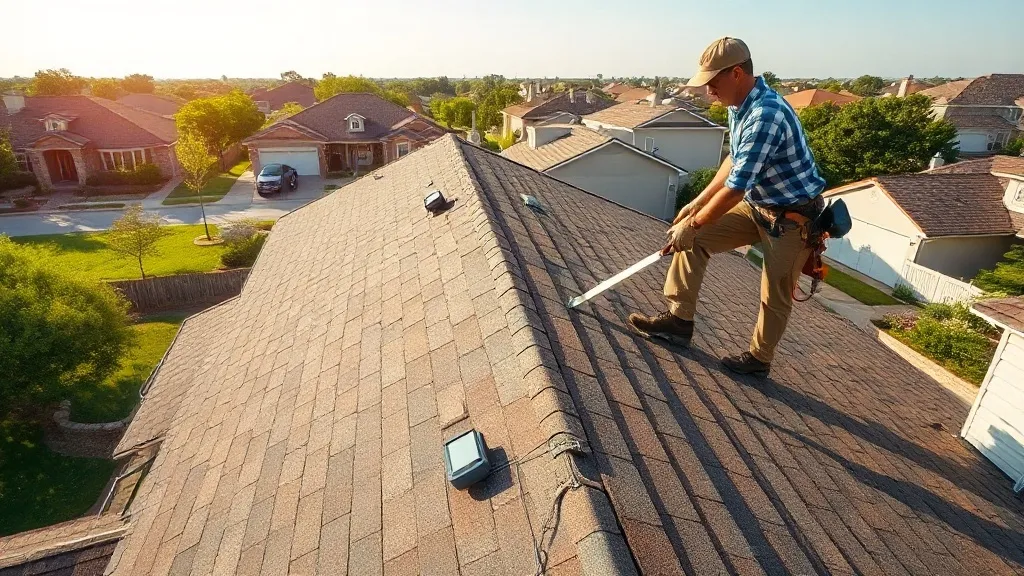
A roof problem doesn't wait — and neither should the inspection.
Texas roofs take more abuse than most — intense UV in summer, hail events that can happen in any season, and in the Gulf Coast corridor, hurricane-force wind and sustained rain that tests every flashing joint and seam. The damage from a storm event isn't always obvious from the ground. Granule loss, cracked ridge caps, and lifted flashing all let water in slowly — often for months before the first visible ceiling stain.
Roof repairs covered by Lubbock TX Handyman range from targeted single-area shingle replacement and flashing repairs to larger storm damage sections. Full roof replacements are coordinated with a licensed roofing partner to ensure the job meets local permit and manufacturer warranty requirements.
Every repair starts with a written inspection report and a clear estimate. We document the damage thoroughly — useful both for your records and for any insurance claim you file.
What's included
How storm damage progresses — and why early repair matters
Hail damage to asphalt shingles works in stages. The impact bruises the shingle mat and knocks off the protective granule coating — neither of which causes an immediate leak. Over the following months, the exposed mat absorbs UV and moisture, becomes brittle, and begins to crack at the impact points. Water infiltration typically starts 6–18 months after the original storm event, by which time many homeowners have lost the insurance claim window.
This is why a professional inspection immediately after a significant hail or wind event matters — even when there's no visible interior damage. The repair cost at the shingle stage is a fraction of what it becomes once water reaches the decking or the attic insulation.
Flashing — the most common leak source
Most residential roof leaks don't come from failed shingles in the field — they come from failed flashing at penetrations, valleys, and transitions. Chimney flashing, pipe boot flashings, and the step flashing along dormers and walls all degrade faster than the surrounding shingle field, and they're the first place water finds its way in.
Proper flashing repair requires removing the overlapping shingles, fitting new flashing with the correct overlap and sealant, and reinstalling everything in the correct order. We don't caulk over lifted flashing and call it fixed.
From first call to final check.
Call & describe
Tell us what's happening — a leak after a storm, missing shingles, visible hail damage. We'll ask the right questions to prioritize the visit.
Inspection & estimate
A thorough roof inspection with a written damage report and a clear quote for repair or replacement — no pressure to sign anything.
The repair
The work goes safely and methodically — protected decking, proper flashing, and manufacturer-compliant shingle installation.
Final check
The repair gets checked from the attic and the exterior before the job is signed off. No patch-and-leave.
Frequently Asked Questions
How long should a roof last in Texas?
Standard asphalt shingles in Texas last 15–25 years depending on pitch, ventilation, and weather exposure. In the Houston corridor — where UV intensity, humidity, and storm frequency are all higher than average — the lower end of that range is common. A roof inspection can tell you where yours stands.
What roofing material holds up best in Gulf Coast heat and humidity?
Architectural (dimensional) asphalt shingles rated Class 4 for impact resistance hold up well in the Houston area's hail and wind exposure. Metal roofing performs better long-term in heat and humidity but costs more upfront. We'll explain the tradeoffs for your specific situation during the estimate.
Can I tarp my roof after storm damage?
Yes — emergency tarping is available to protect interior damage from continuing after a storm event. It's a short-term solution that buys time for a proper repair estimate and any insurance claim process.
Does homeowner's insurance cover storm roof damage in Texas?
Most Texas homeowner policies cover wind and hail damage to the roof. Documentation is the key — photos taken as soon as possible after the storm, a professional damage report, and a written repair estimate. We can provide a detailed written damage assessment suitable for insurance filing.
How do I know if I have hidden storm damage that isn't leaking yet?
Granule loss, cracked shingles, and damaged flashing often precede visible leaks by months. The best time to find them is right after a major storm or hail event, before weather resets the evidence. A professional roof inspection after any significant storm is worth the cost.
Do I need a permit to replace my roof in Texas?
Permit requirements vary by municipality. Many Texas cities require a permit for full roof replacement but not for minor repairs. We'll confirm the local requirement for your address during the estimate and coordinate any necessary permits.
Roofing in your city.
Every town puts a different kind of wear on a home. These pages cover what the job actually involves in each city — the local soil, climate, and housing stock included.
Roofing in Cleveland
Liberty County
Roofing in Freeport
Brazoria County
Roofing in Humble
Harris County
Roofing in Huntsville
Walker County
Roofing in Katy
Waller / Harris County
Roofing in Livingston
Polk County
Roofing in Richmond
Fort Bend County
Roofing in Willis
Montgomery County
Don't see your town? See all service areas or ask about your address.
Don't let storm damage sit — get it documented and repaired.
Free written estimates, insurance-ready damage reports, and repairs done right the first time.